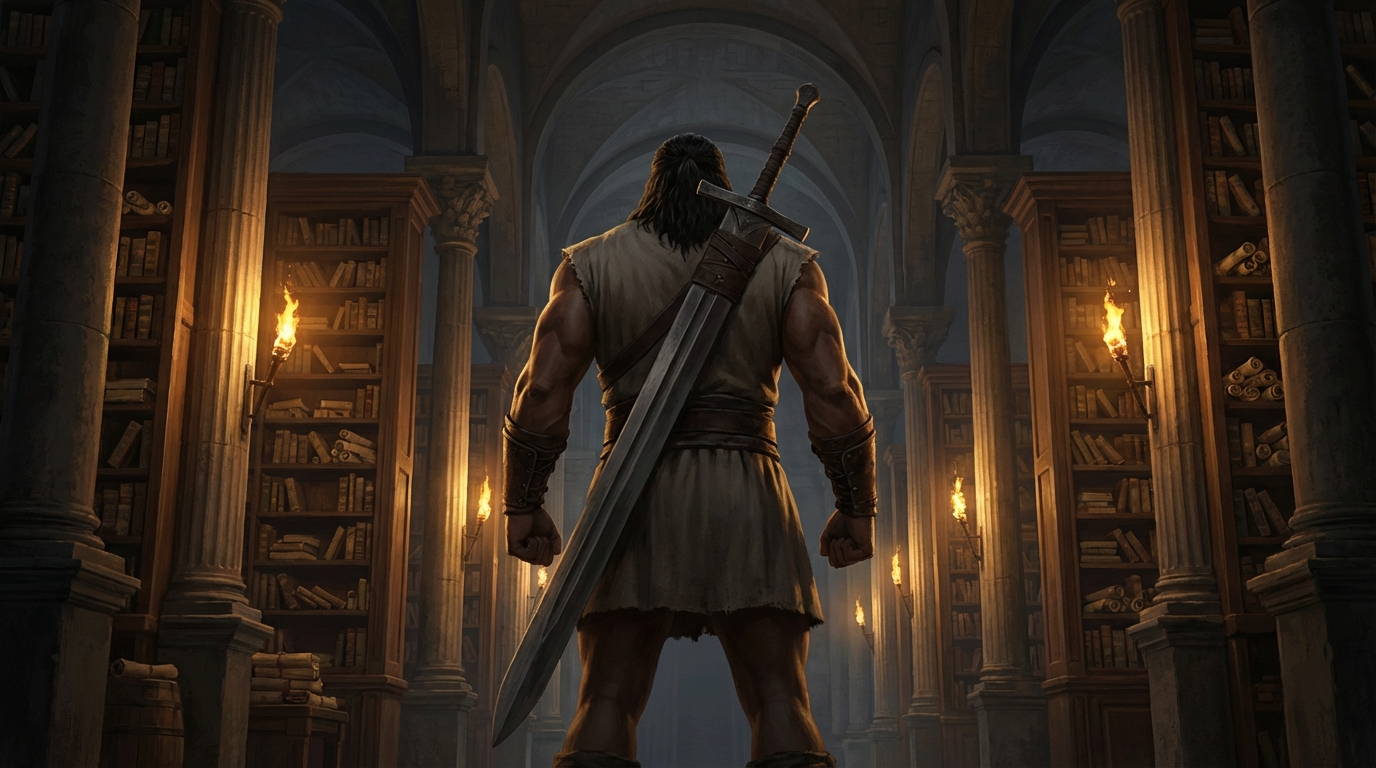
Warrior-Scholar of the Hyborian Age
Conan the Librarian
Head Librarian of Tarantia · Defender of the Written Word · Author of The Conan Decimal System
c. 10,482 – 10,551 B.C.E.
Scroll Down
Head Librarian of Tarantia · Defender of the Written Word · Author of The Conan Decimal System
c. 10,482 – 10,551 B.C.E.
Chapter I
"He did not seek to conquer nations. He sought to catalog them."
Born in the frost-blackened hills of Cimmeria, the child who would become the greatest librarian of the Hyborian Age was orphaned before his third winter. His village was razed in one of the countless border wars that defined that brutal era. Of the boy's parents, nothing is known — not even their names survive in the oral record. What survives is the child: enormous even in infancy, silent, watchful, and possessed of an appetite for knowledge that his caretakers could neither explain nor satisfy.
The boy was found among the ruins by the wandering archivist Vala-Thun of Shadizar, a woman of legendary patience and organizational resolve. Recognizing something extraordinary in the child — perhaps the way he arranged the rubble of his village into neat, categorized rows — Vala-Thun took him as her ward. For fourteen years, she raised him in the Shadizar Archives, teaching him the ancient arts of scroll preservation, cross-referencing, and the sacred practice of reshelving. It was Vala-Thun who taught him the principle that would define his life: "A misplaced book is a weapon aimed at civilization itself."
By his twenty-fifth year, Conan had traveled the breadth of the Hyborian kingdoms, not as a conqueror but as a bibliographic surveyor. He cataloged the private libraries of seventeen kings, recovered lost manuscripts from the Turanian wastes, and personally carried the complete works of the Stygian philosopher-poets across the Karpash Mountains on his back — a journey of four hundred leagues that he completed in a single season, pausing only to rebind volumes damaged by rain. His appointment as Head Librarian of the Great Library of Tarantia in 10,521 B.C.E. was, by all surviving accounts, unanimous and tearful.
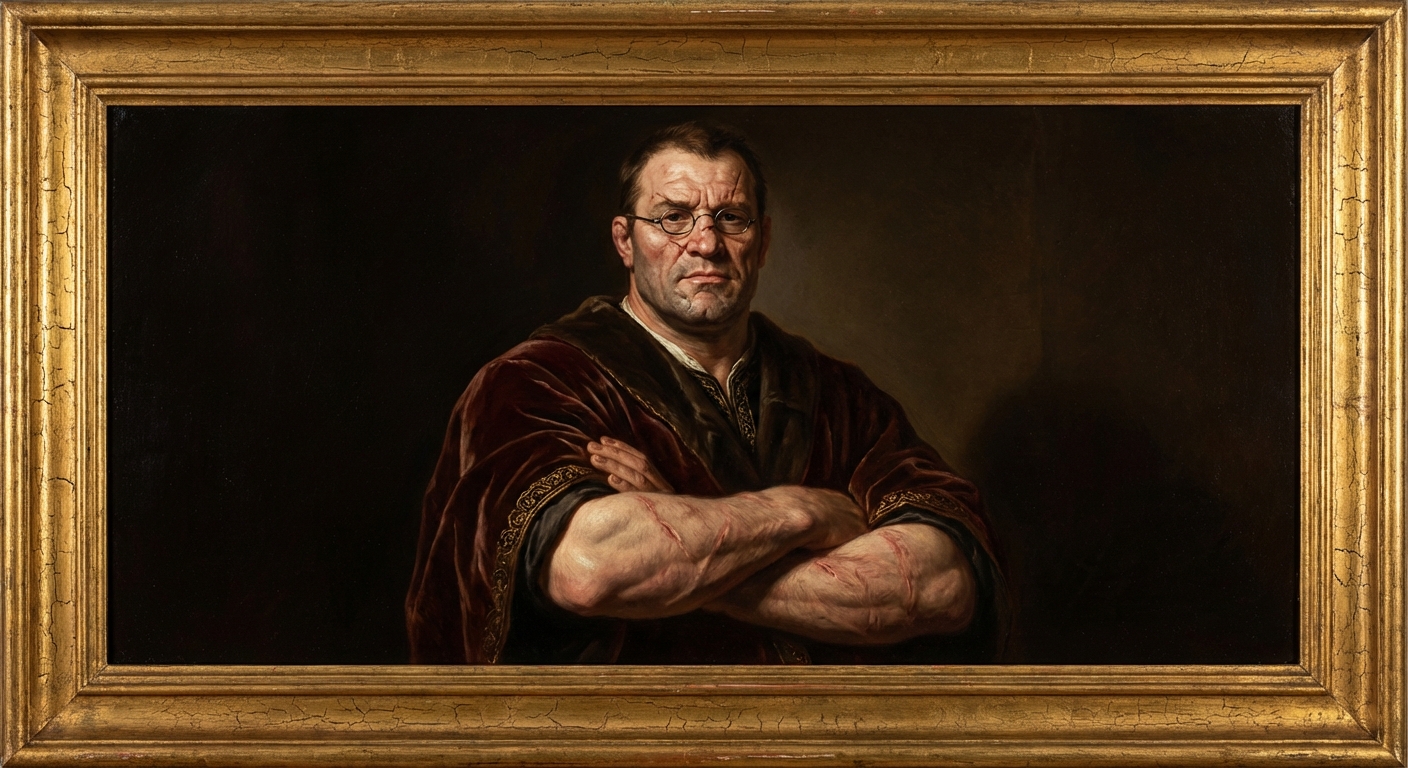
Conan in his ceremonial reading robes, c. 10,530 B.C.E. — Oil on canvas, artist unknown. Collection of the Tarantian National Museum.
In the spring of 10,534 B.C.E., King Numedides of Aquilonia — motivated by what historians agree was a catastrophic failure of judgment — announced the complete defunding of the royal library system. Forty-seven branch libraries across the kingdom were to be closed. Their contents were to be sold to private collectors or, in the king's own words recorded by the court stenographer, "burned for all I care."
Conan received the news during his morning cataloging session. According to witnesses, he carefully placed his bookmark, removed his reading spectacles, folded them into his breast pocket, and walked to the throne room. What transpired there took less than four minutes. The chronicler Pallantides recorded simply: "The king was deposed. The library budget was restored. The Librarian returned to his desk before his tea had cooled."
His magnum opus, The Conan Decimal System: A Complete Methodology for the Organization of All Human Knowledge, was published in 10,539 B.C.E. The work spans fourteen volumes and remains, to this day, the most comprehensive cataloging system ever devised. Its influence cannot be overstated. Before Conan, libraries were organized by the whims of individual scribes — by color, by size, by the mood of the librarian on any given morning. After Conan, there was order. There was structure. There was a place for everything, and woe unto those who returned things to the wrong place.
"He was the largest man I have ever seen, and the gentlest — so long as you treated the books with respect. For those who did not, he was something else entirely."— Zenobia of Nemedia, personal correspondence, c. 10,536 B.C.E.
Chapter II
Codified by Conan in the winter of 10,527 B.C.E., these tenets governed every library under his authority. They were carved into the stone lintel above the entrance to the Great Library of Tarantia, where they remain to this day.
Silence is not the absence of sound. It is the presence of thought. To break the silence of a library is to interrupt the thinking of a civilization. Those who speak above a whisper in the reading halls shall be escorted out. Those who shout shall not return.
The overdue fine is sacred. It teaches discipline, patience, and fear. No person — not king, not warrior, not priest — is exempt from the overdue fine. It is the great equalizer. It reminds us that we are all borrowers in this life, and that all things must be returned.
To crack the spine of a book is to break the backbone of knowledge. Hold the volume gently. Open it with care. Let the pages fall where they will, but never force them. A book bent backward is a trust betrayed.
There exist, in every library, small slips of parchment provided at no cost. These are called bookmarks. Use them. To fold the corner of a page is an act of barbarism unworthy of even the most illiterate Hyperborean raider. The Librarian has personally ended wars over less.
The librarian does not guard the books. The librarian guards the right of every person to read them. A locked library is a prison. An open library is a kingdom. The librarian's sword is drawn not to keep people out, but to ensure they may always enter.
A book borrowed is a covenant. It says: I trust you with the accumulated wisdom of those who came before. Return it. Return it on time. Return it in the condition in which it was lent. The Librarian's memory is long, and his reach is longer.
Chapter III
The key events of a life devoted to the preservation and dissemination of human knowledge.
Born during the worst blizzard in recorded Cimmerian history. The midwife later noted that the infant did not cry — he simply looked around the room with an expression she described as "cataloging."
Following the destruction of his village, the child is discovered by the archivist Vala-Thun arranging charred roof timbers by length and thickness. She takes him to the Shadizar Archives.
At seventeen, Conan produces his first complete catalog of the Shadizar Archives — 42,000 entries, cross-referenced by author, subject, region of origin, and binding material. Vala-Thun weeps with pride.
Carries the complete works of the Stygian philosopher-poets — 800 pounds of scrolls and bound codices — across the Karpash Mountains on his back. Loses not a single page.
When a Turanian warlord besieges the Shadizar Archives with an army of 3,000, Conan single-handedly defends the east wing for seven days and seven nights, protecting over 10,000 irreplaceable scrolls. He fights with a reading lectern in one hand and his broadsword in the other. The Turanians withdraw. Not a single scroll is damaged. Conan reshelves everything before dawn.
Unanimously appointed by the Council of Scholars. During his acceptance speech — the shortest in the institution's history — he says only: "The catalog needs updating. I will begin immediately." He does.
Inscribes the six tenets of library conduct into the stone lintel of the Great Library. The chisel work takes him a single afternoon. The stonemason's guild later declares the feat "physically impossible." Conan does not comment.
Upon learning of the king's intent to defund the library system, Conan walks to the throne room and deposes him. Total elapsed time: three minutes and forty-seven seconds. The library budget is increased by 200%. Conan declines the crown, stating he is "too busy for politics."
His fourteen-volume masterwork is published. It categorizes all human knowledge into ten primary classes, one hundred divisions, and one thousand sections. Scholars across the Hyborian world adopt it within a decade. Those who do not adopt it receive a personal visit.
Conan is found at his reading desk at the age of sixty-nine, a volume of Nemedian poetry open before him, his reading spectacles still perched on his nose. The cause of death is listed as "completion." His final bookmark placement is said to be perfect.
Chapter IV
The relics of a life spent in service to knowledge. Each artifact is held in the permanent collection of the Tarantian National Museum, Wing of Bibliographic History.
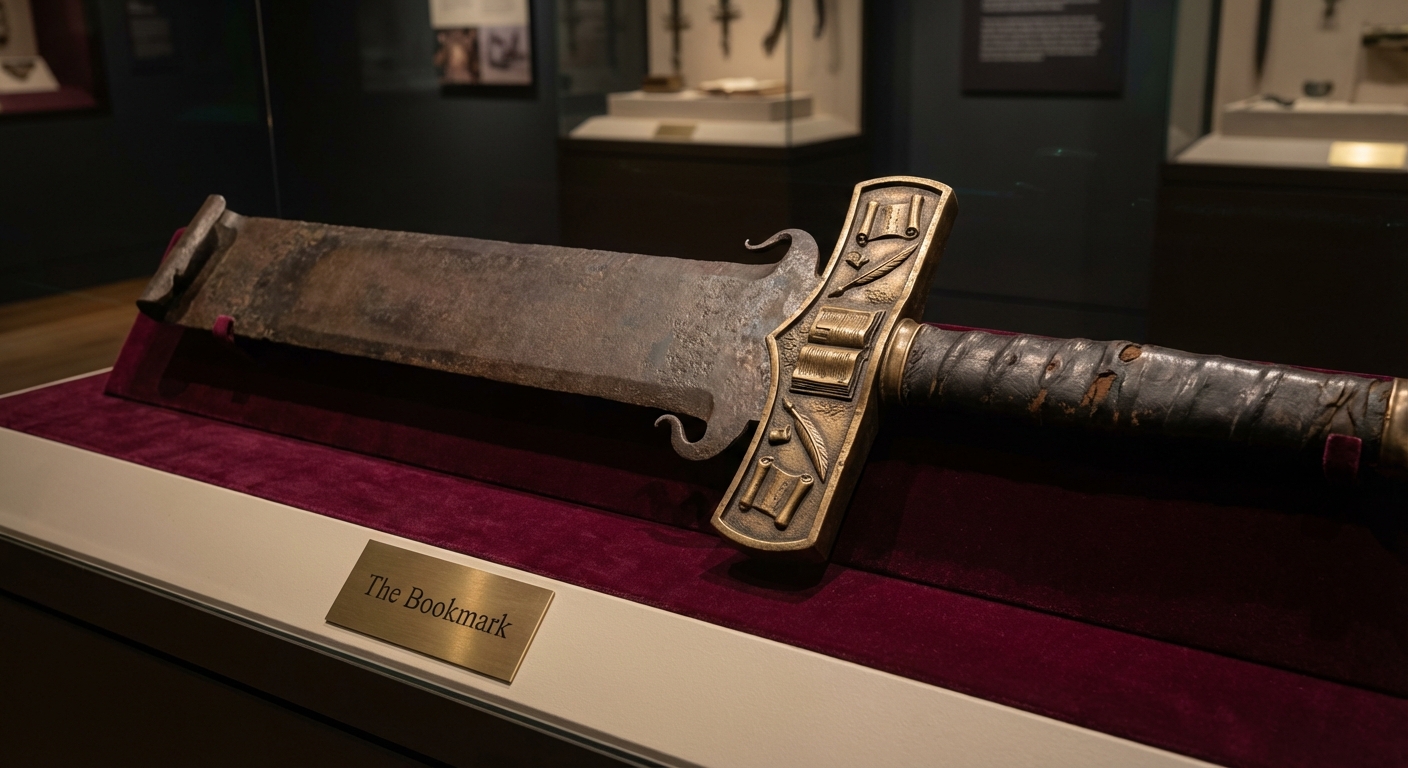
Weapon · Steel & Leather
His legendary two-handed broadsword, named not for its use in battle but for the thin, flat shape of its blade — which Conan occasionally used to mark his place in particularly large tomes. The weapon weighs forty-seven pounds. The name is not a jest. Conan did not jest.
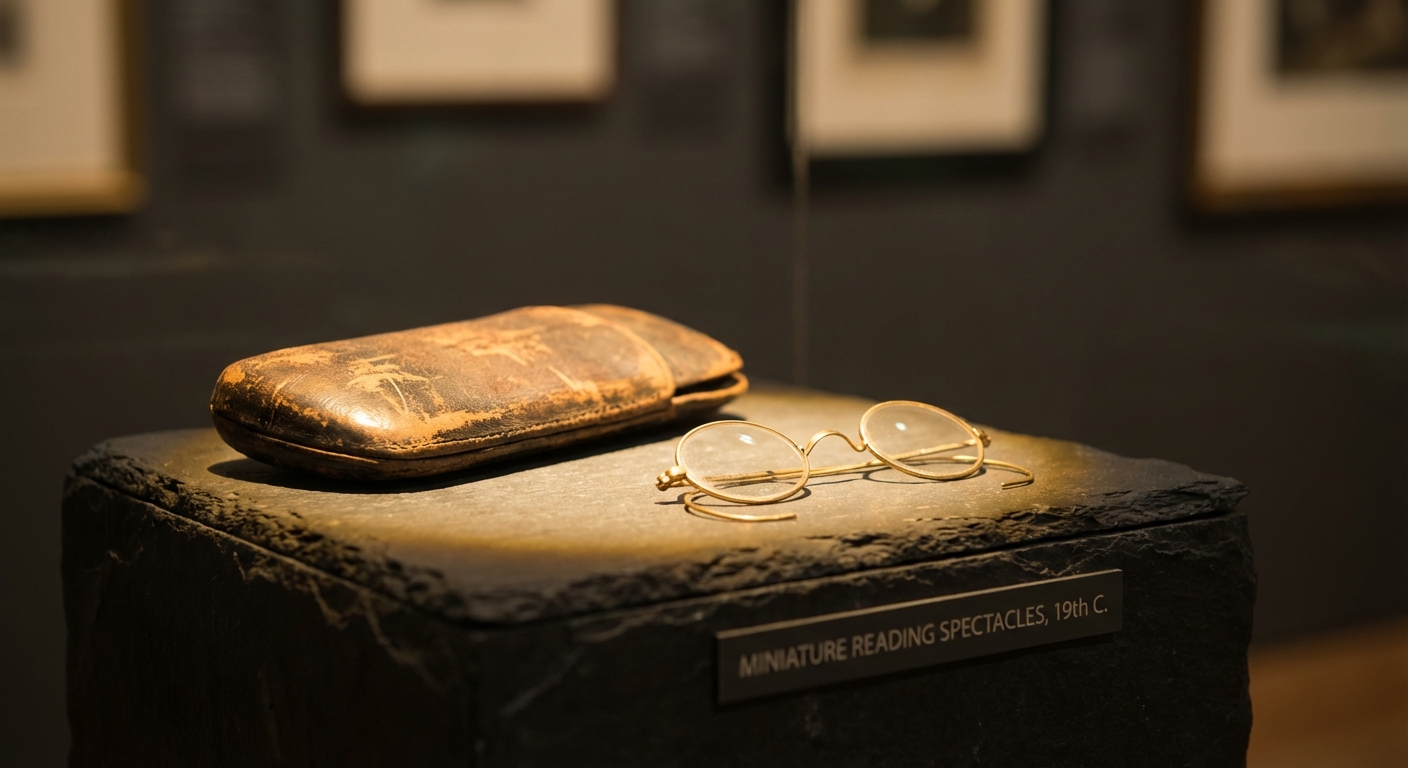
Personal Effect · Wire & Glass
Impossibly small, impossibly delicate wire-frame spectacles that perched on the bridge of his enormous, twice-broken nose. Forged by the master optician Khossus of Koth, they required three attempts — the first two pairs were crushed accidentally when Conan sneezed.
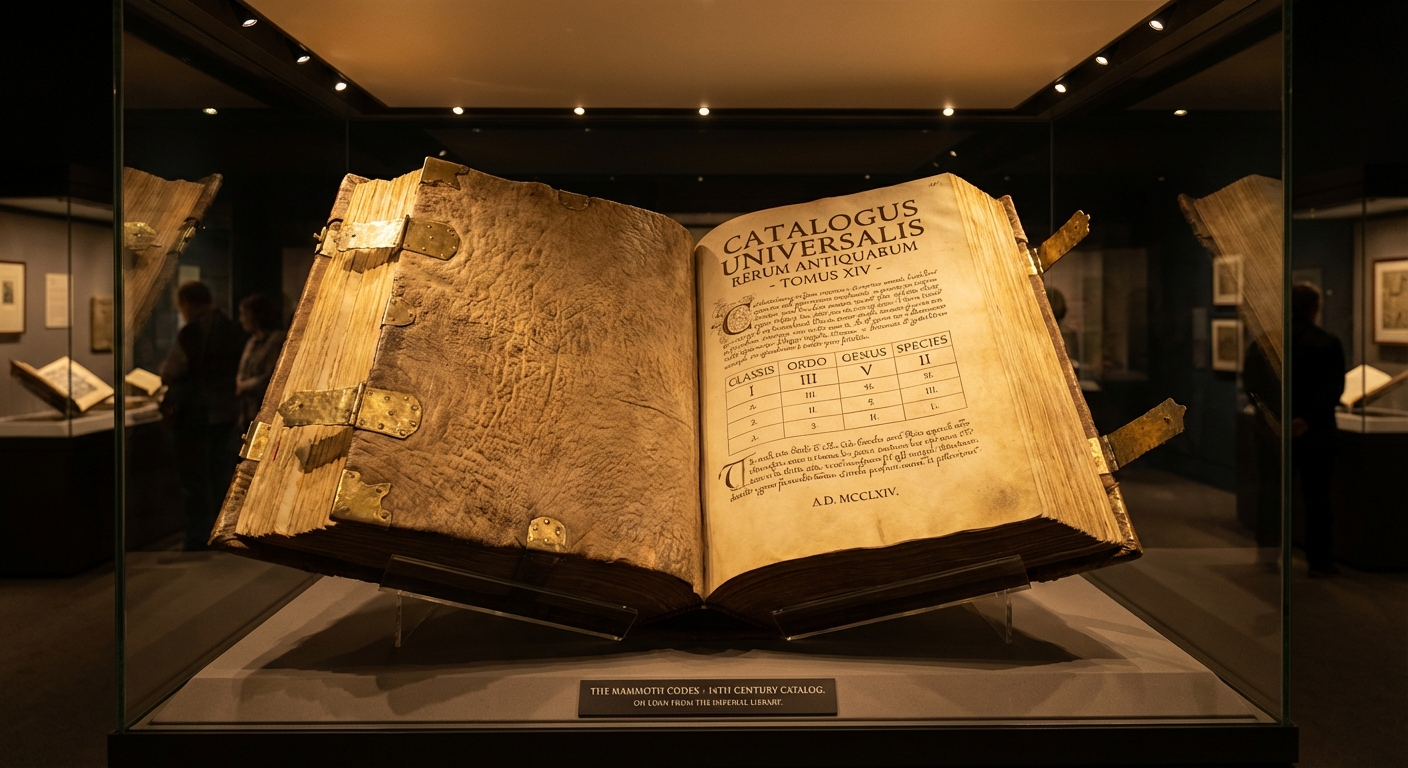
Manuscript · Vellum & Mammoth Hide
The original manuscript of his fourteen-volume masterwork, written in Conan's own hand — a surprisingly elegant script for a man whose fingers were the width of sword hilts. Bound in mammoth hide. The margins contain his personal annotations, many of which simply read "No."
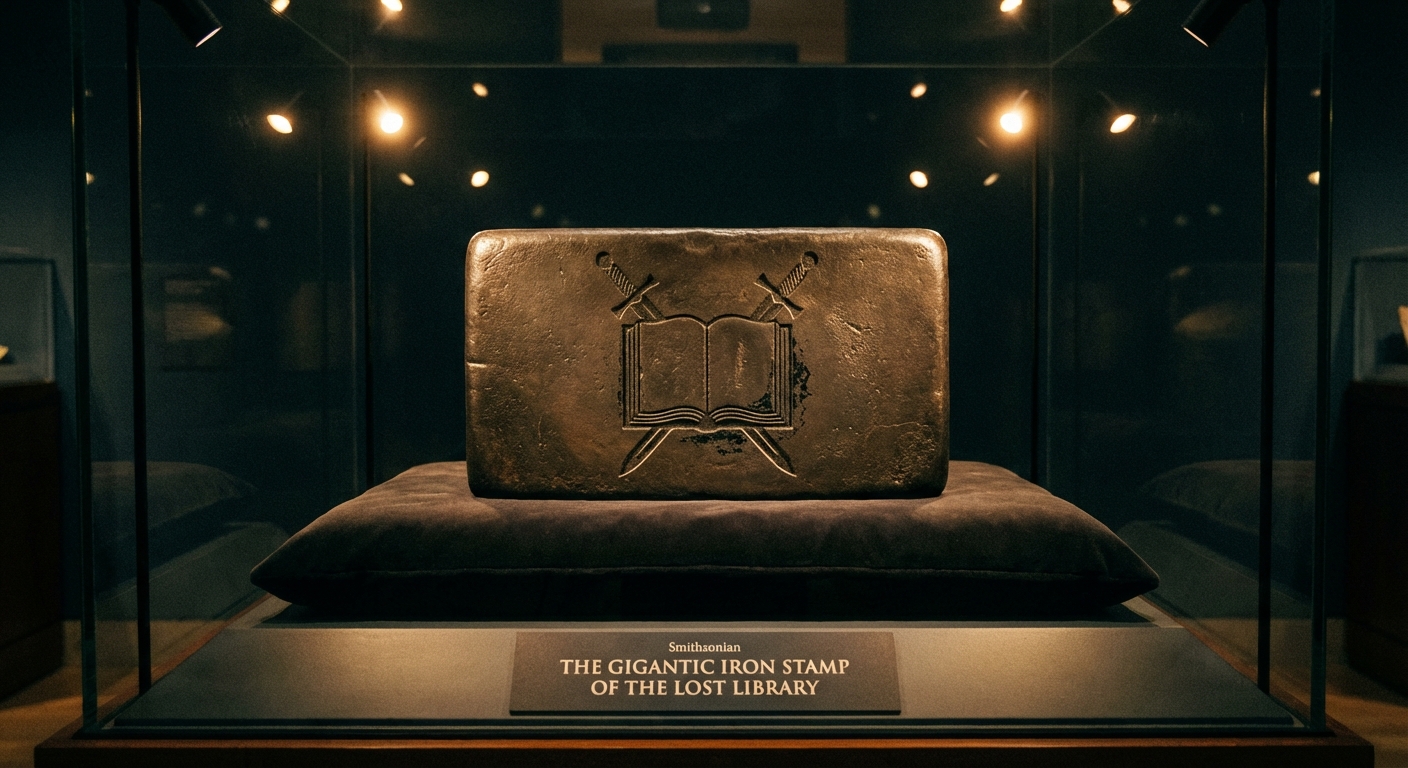
Tool · Iron & Ink
The official library stamp, forged in iron rather than the customary wood. Conan's grip destroyed seven wooden stamps in his first month. The iron version weighs twelve pounds and bears the seal of the Great Library — an open book flanked by two crossed swords.
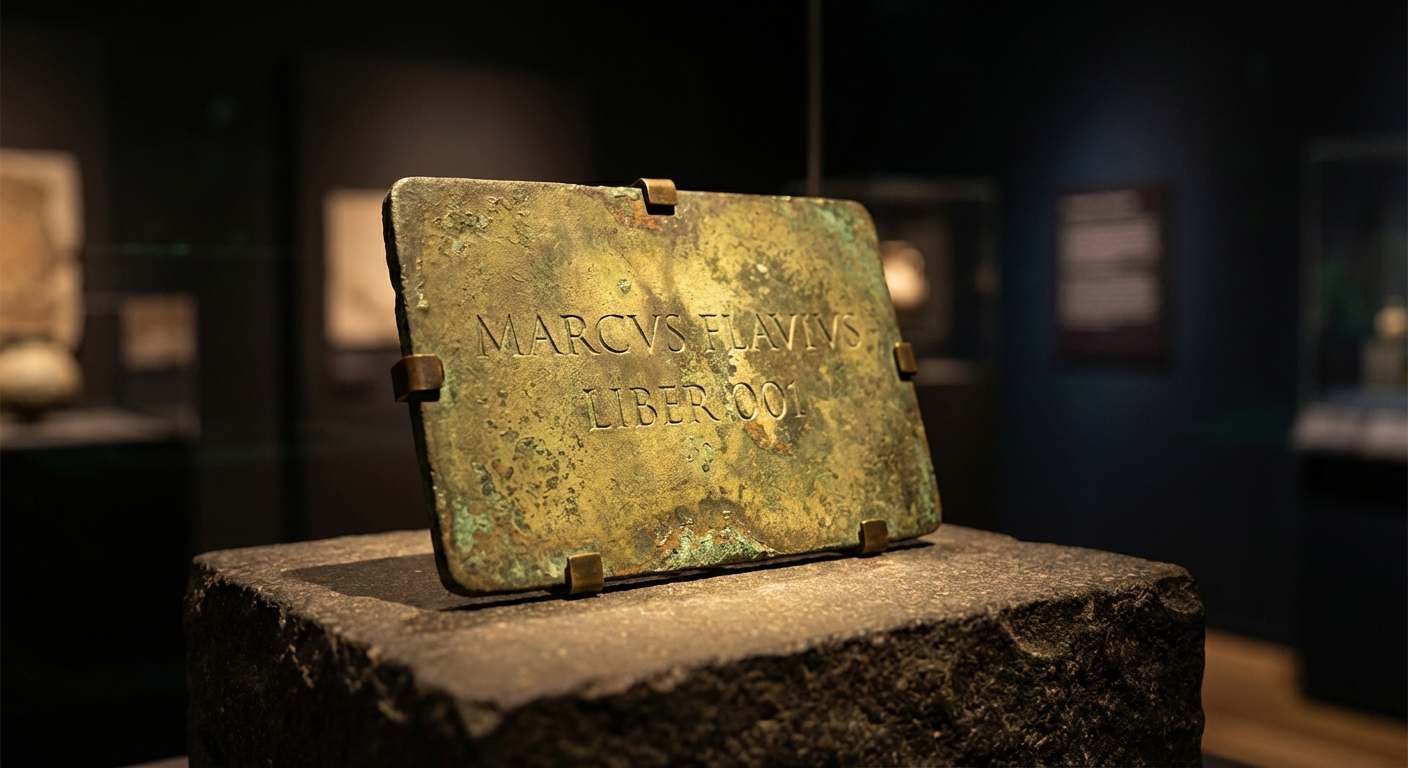
Document · Bronze
The first library card ever issued under the Tarantian system, bearing Conan's own name. Cast in bronze rather than written on parchment, because — as Conan explained to the bewildered metalsmith — "Parchment burns. Bronze endures. Knowledge must endure."
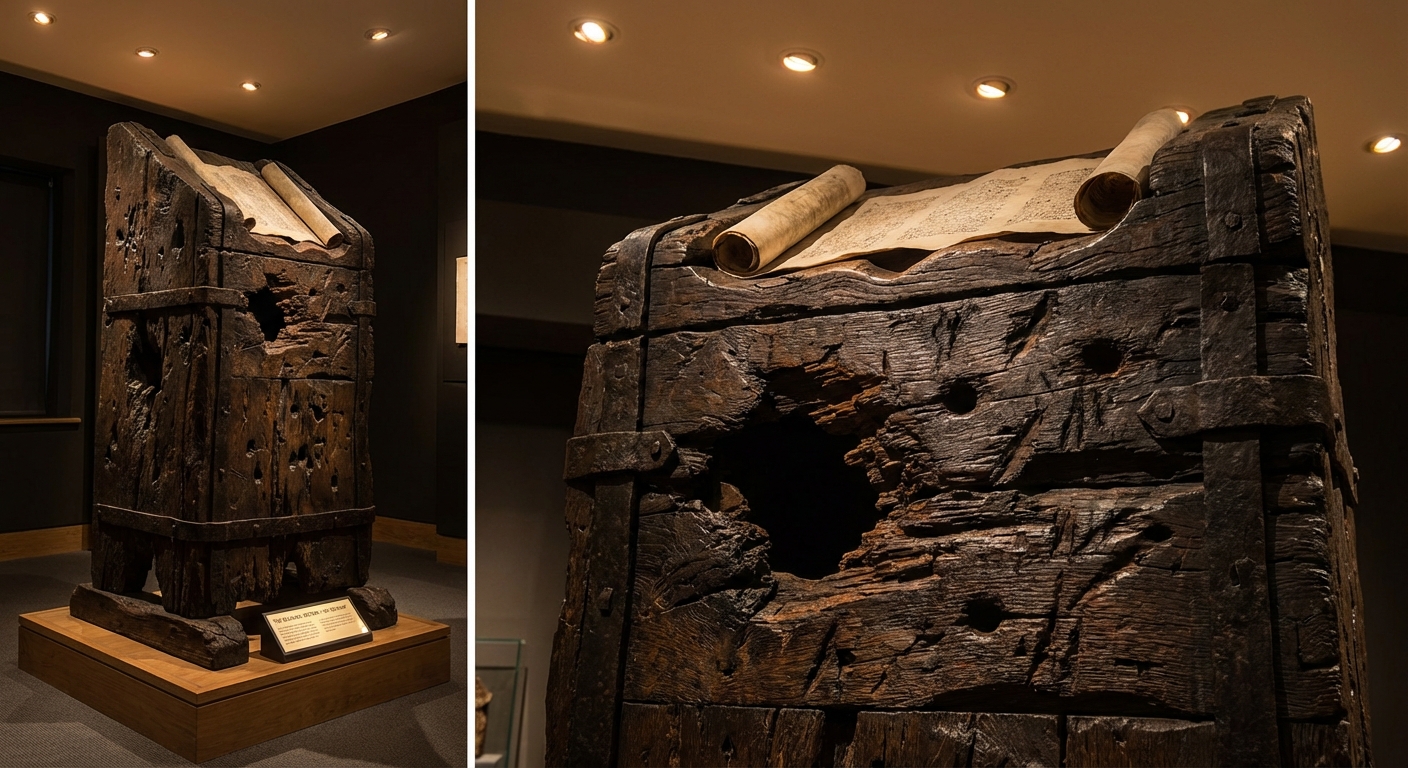
Furnishing & Weapon · Oak & Iron
The reading lectern Conan wielded as a shield during the Siege of the Shadizar Archives. It bears the scars of over two hundred sword strikes and one catapult bolt. It also still holds, in its book groove, the volume Conan was reading when the siege began — a treatise on proper scroll storage.
Chapter V
Collected from his writings, recorded speeches, and the testimony of those who knew him. Each quotation has been verified against at least two independent Hyborian-era sources.
Civilizations are not remembered by their swords. They are remembered by their library cards.— Address to the Council of Scholars, 10,521 B.C.E.
I have killed men for many reasons. Poor shelving technique is not yet among them. I stress the word 'yet.'— Remark to a junior archivist, recorded by Pallantides, c. 10,528 B.C.E.
Between the covers of a book lies the whole wealth of human existence. And I will guard it as fiercely as any dragon guards its gold — more fiercely, because gold cannot teach you anything.— The Conan Decimal System, Vol. I, Preface
There is no enemy more dangerous than ignorance. It does not bleed when you cut it. It does not fall when you strike it. It can only be defeated with patience, with knowledge, and with a well-organized reference section.— Personal journal, undated entry
You ask me what is best in life. I will tell you: to catalog the world's knowledge, to see it shelved correctly before you, and to hear the quiet turning of pages in a well-lit reading room.— Attributed, source disputed but widely accepted as authentic
The man who burns a book burns a future he is too small to imagine.— Inscription on the rebuilt east wing of the Shadizar Archives, 10,513 B.C.E.
I do not fear death. I fear an uncataloged collection.— Last recorded words, spoken to his assistant three days before his passing